
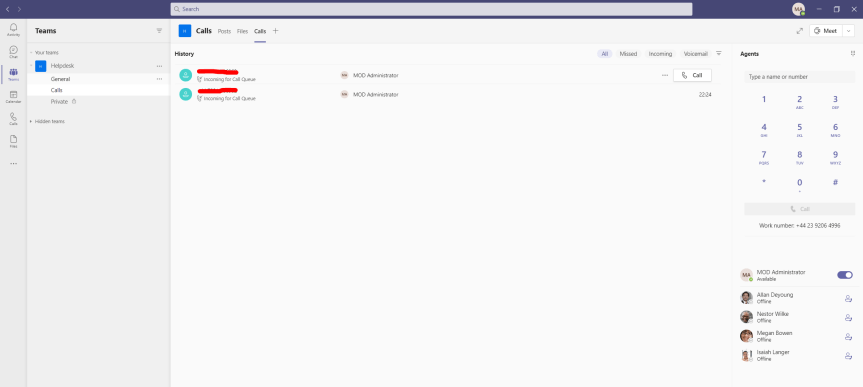
I remember Ignite 2020 well. Uber long days and an obscene amount of awesome content that between speaking and moderating it was an all-you-can-eat buffet both live and on demand. Day 1 was frontloaded with so many big sessions on Teams. After Nadella, it was Spataro. After Spataro, it was Teper. Then after Teper, Herskowitz. Then it was Torok and so on and so forth. After taking a 'break' moderating a 90 minute Learn session with worldwide learning on Teams which washed up about 10pm it was back into the fray. Sec. Power Platform. Yet the way my schedule had panned out I ended that first day watching a double header on Teams calling. The first was with Paul Cannon which was the live session and the second was the advanced calling session on demand. Whilst the second session was valuable simply for the announcement of dynamic CLID's which I'd been getting asked for a lot, it was the first - the one with Cannon which really had the goods. First, Collaborative Calling. Second, a refresh of the Calling UX. Now, the refresh was clever - shifting the dial pad and basing the app around call history because not only was it streamlining a number of unnecessary pages it was rooting calling in calls as opposed to people. But the real gold was collaborative calling. This is the ability to connect a call queue to a teams channel where users can collaborate and share information in the channel while taking calls in the queue. Many admins I knew had wanted it and wanted it bad. For a long long time. Yes, it wasn't comms credits in CSP, nor was it smaller domestic SKU's - I think there will be celebrations when these occur, but oversight of a call queue where every member assigned to that call queue can work together: this is a big gap that Microsoft committed to plugging. I thought personally it was one of the best announcements of Ignite 2020. It's a real quality add and it's awesome that it's finally here.
Teams Real Simple with Pictures: Parallel Approvals in Microsoft Teams
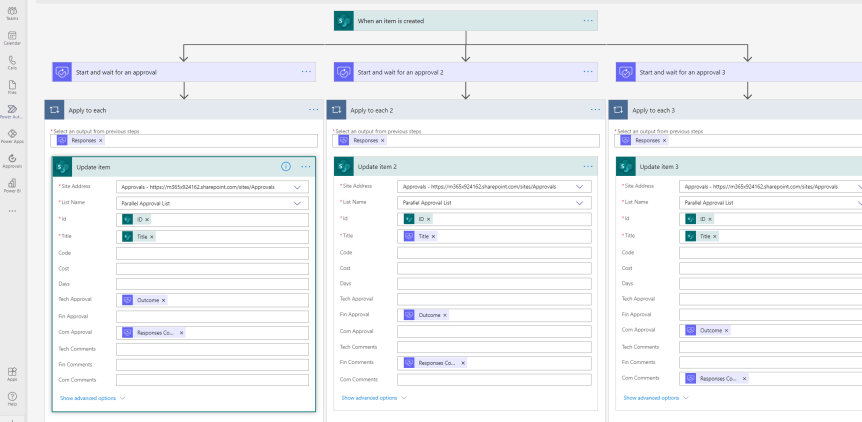
Having just got back from 3 days at the MCT Connect and MCT RL conference, I am looking forward to the conference season. Sounds weird to say it like that. But I guess what I am trying to articulate is that after having had good fun at Ignite, MVP Summit and MCT - all large multi day events, I am looking forward to getting back to speaking at singular day events and user groups where you can kind of rock up, do a nice session, and exit stage left, maybe catching one or two other sessions in the process. Transactional. Light. I am sure many circuit speakers understand where I am coming from. Now, for me, the 2021 conference season kicks off with a trip back to the Reactor where I'll be speaking with Vesa Nopanen on approvals. We've got a lot of demo lined up and we need to try it out for Marathon the week after. But when I was stitching the session together I thought of an idea that I wanted to explore a few months back when I was doing blogs on approvals but never got around to, which was parallel approvals. You see, if you are like me who operates across departments or support multiple business units within a group, parallel approvals are important because approval needs to come from multiple independent stakeholders. Imagine this scenario, I used to be Head of Professional Services where I worked, and when I was designing and developing new Professional Services items I used to need technical, financial and commercial sign off. They wouldn't make the decision together because they are all independent, and so before an item could be released all the stakeholders would need to evaluate it based on their respective reviews before it could go to market. I know, I know, I still have that blog on Viva Connections to do and that's probably more relevant and in vogue, but hey I have an approvals session on Tuesday and the completionist in me hates leaving things I meant to cover previously
Teams Real Simple with Pictures: Custom Policy Packages
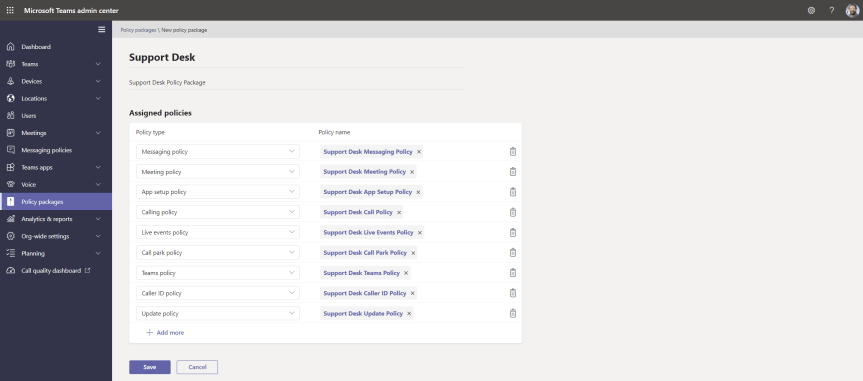
On the speaker circuit I occasionally talk about Policy Management in Microsoft Teams. It's something I enjoy talking about too. Why? Because when it comes to Teams I believe having a good grasp of policy is necessary for shaping a good user experience. It's important too from a security, compliance and governance perspective. Now like any talk this one's evolved to account for a number of incremental adds. We've seen the introduction of update policies where you can add users into private preview to test out functionality in advance. We've seen template policies. We've seen the ability to use the TAC to manage meeting backgrounds within the meeting policy. And during all of these talks one of the things which has featured has been policy packages. Policy packages are defined as 'a collection of predefined policies and policy settings that you can assign to users who have similar roles in your organization'. In other words, we assign a policy package to a teacher, or a student or a nurse or to a firstline worker - and that policy package contains a messaging policy, and a meeting policy, and a live events policy and so on and so forth. The benefit of the policy package - a container as it were similar to an access package in Azure AD - is that it makes it easy for administrators to standardise what users can do and how users can experience Teams based upon role. It can make it easier to assign multiple policies without getting too granular. An awesome functionality is that you can also use group policy with dynamic groups and assign the correct packages as users transition roles. Yet for all the virtues of packages, the big limitation has always been we couldn't create custom policy packages. We've had a number of preconfigured ones by Microsoft - and that's all well and good except we've needed to create packages for our own roles, our own organisations. Well now we can
Teams Nation reaches 1000 registrants, and will be returning April 6th 2022
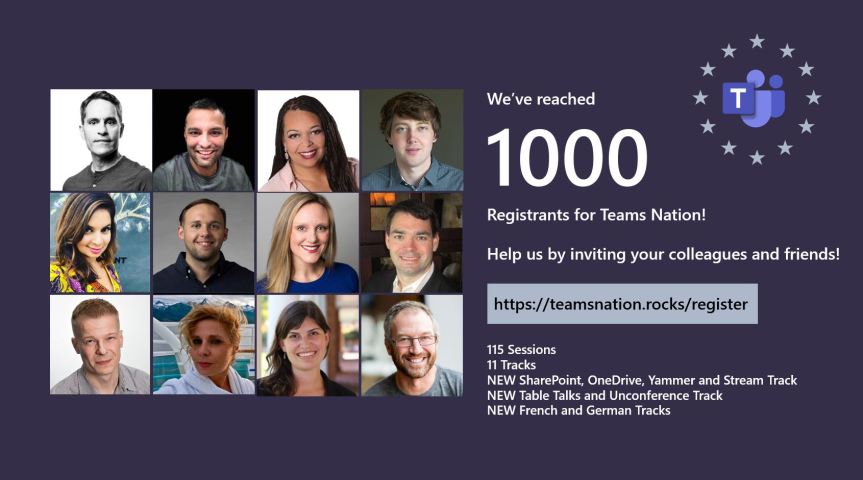
The excitement for Teams Nation is building. Today, we discovered that we had surpassed 1000 registrants, which is absolutely amazing considering that just a few weeks ago we thought that we may not have been able to run Teams Nation at all. Now that the dates for Microsoft Build have been officially confirmed (25th - 27th May) we can disclose that we discovered these dates via a leak online and had to make an immediate call on whether to stick with the date of 26th May, whether to reschedule or whether to cancel it outright. Since we had committed to doing another event last October - the first since we changed the name from TeamsFest to Teams Nation we really didn't want to can it since we had been working on it since the new year. We also decided that it would be unfair to make attendees choose between Teams Nation and Build as we thought many who would register for our event would ultimately like to attend both. So we ended up bringing Teams Nation forward by two weeks to Wednesday 12th May. Our choice on this date is mainly due to when all of us were available, as well as avoiding conflicts or being too close to any other events that we were aware of in the calendar
Teams Real Simple with Pictures: Using the TAC to manage users backgrounds in Teams Meetings
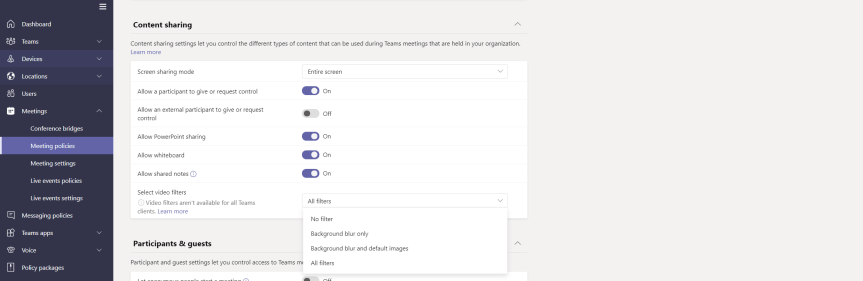
A real short one this week - for two reasons. The first is that I am on annual leave - and whilst annual leave may conjure up the romantic idea of taking a break, this is when I usually crack on with the long list of things which I need take care of at home. This Easter weekend has included completing a 6 x 8 concreate base for a shed, and putting up a large trampoline in the back yard for my son. Secondly, I was all up for writing an in depth blog for Viva Connections - and I started doing that until I realised that the SharePoint app bar hasn't surfaced in my demo tenant yet. I decided I didn't want to push something out that I wouldn't be ultimately happy with. So in the meantime I was searching for something to write about when I saw that the ability to control meeting backgrounds has now come to the TAC. For some time this has only been available in PowerShell - and whilst this blog will literally be up there with the shortest I have ever written, the functionality is really important to consider for all organisations. Why? You see when custom backgrounds were first released there were a lot of people on social racing to advocate how these could be back doored on windows machines. And whilst I agree they were great for identity and personalisation, and great for marketing and buy-in in regards to adoption, I also agree they can be problematic for IT admins. How can they be policed? How could you stop someone in your organisation uploading something offensive as a background? Whilst I hope you haven't seen anything offensive I personally have. I've seen someone outside my organisation using a hospital ward as a background because they thought it was funny to do so during lockdown. I've seen another - again outside my organisation - using politicised images which aren't appropriate nor professional for any type of meeting. Where have they got those images from? Are they commons or are they copyrighted? So we need to make a call, especially as Microsoft Teams does not screen backgrounds which are uploaded by users. Surfacing these in the TAC is good in that it brings attention to these controls, but also helps admins which, let's face it, don't like PowerShell or don't read Docs all too often. Every IT admin now has the ability to easily control backgrounds based on the tools they like to use
 @Microsoft365Pro